Tracing the Development of Specialized Slot Categories in Switzerland's Regulated Digital Gaming Landscape
Rosa Becker · Sep 13, 2026
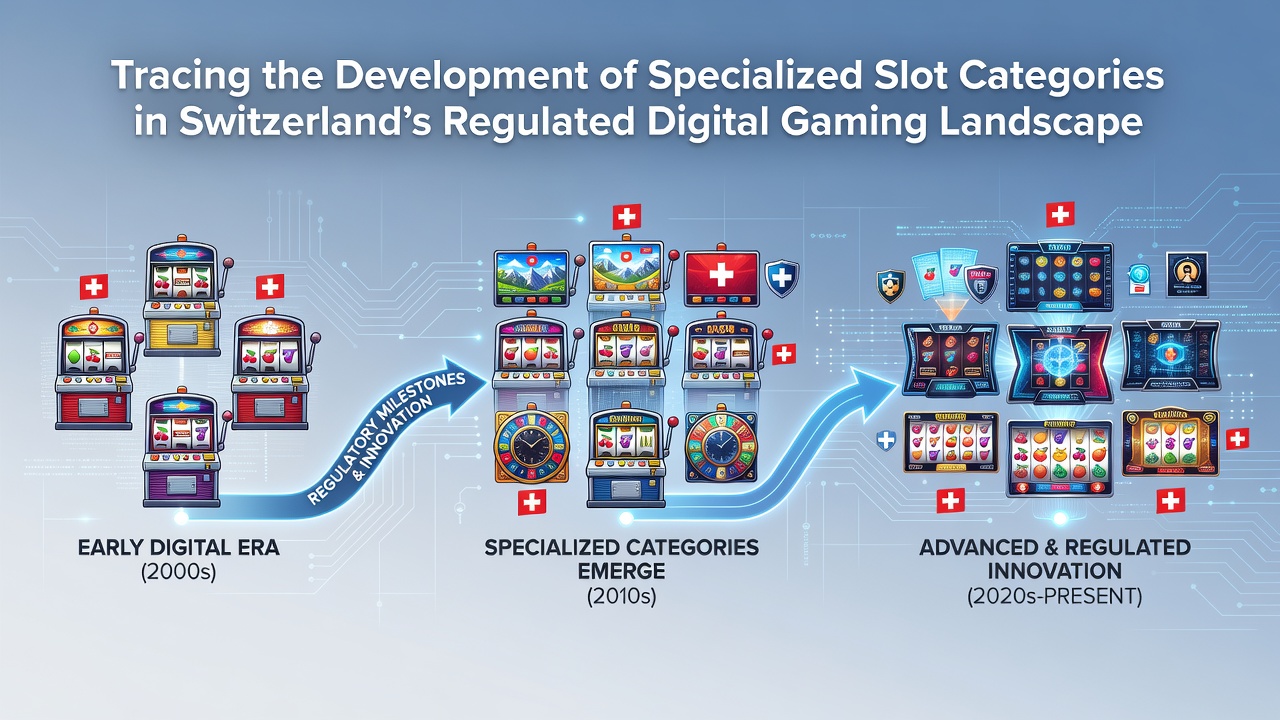
Tracing the Development of Specialized Slot Categories in Switzerland's Regulated Digital Gaming Landscape
Switzerland's regulated digital gaming environment has seen steady evolution in slot categories since the implementation of the revised Gambling Act in 2019, which established clear licensing pathways for online operators while maintaining strict oversight on game mechanics and player protections.
Early Foundations of Slot Regulation
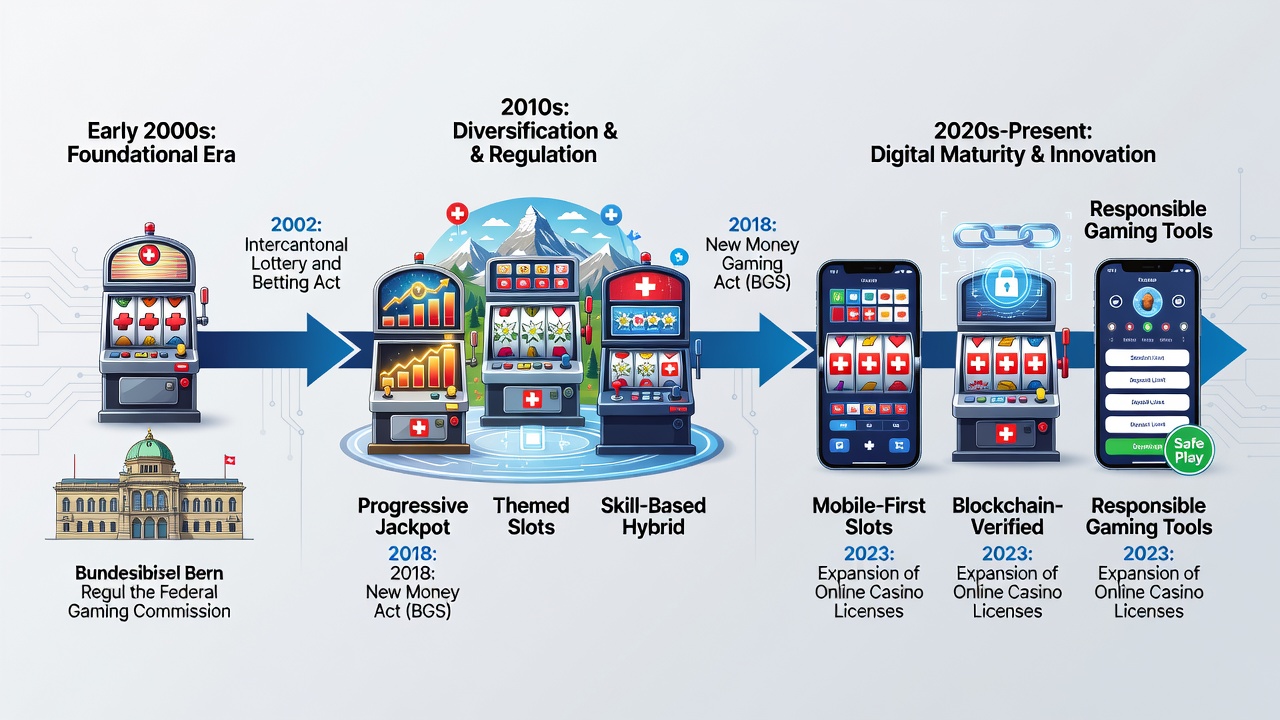
Before the 2019 framework took effect, physical casino slots dominated the landscape under cantonal oversight, yet digital formats remained largely restricted to land-based venues with limited online trials. Observers note that the federal shift opened avenues for specialized digital slots, including video-based formats and progressive jackpot systems, while requiring all games to meet standardized return-to-player thresholds and randomness certifications issued by accredited testing laboratories.
Those who track regulatory timelines point out that licensed operators had to adapt quickly to new technical standards, which encouraged development of categories such as branded entertainment slots tied to popular media franchises and cluster-pay mechanics that replaced traditional paylines with symbol-grouping systems. Data from industry reports shows these adaptations aligned with broader European trends yet remained distinct due to Switzerland's emphasis on localized player verification and spending caps.
Expansion of Category Types Post-2019
Following the law's rollout, specialized categories emerged more clearly in licensed platforms, encompassing Megaways engines with variable reel configurations, cascading reel sequences, and hold-and-win bonus structures. Research indicates these formats gained traction because they complied with volatility disclosure requirements while offering operators flexibility in session length and prize distribution patterns. Figures from Swiss gaming associations reveal that by 2023 the proportion of video slots featuring advanced mathematical models had increased substantially compared to earlier classic three-reel variants.
What's interesting is how verification protocols integrated into slot design, prompting developers to embed real-time limit checks directly into gameplay loops rather than treating them as external overlays. This integration supported categories like low-volatility titles suited for extended play sessions and high-volatility options with rarer but larger payouts, both calibrated to align with federal guidelines on responsible engagement.
Regulatory Influence on Innovation Cycles
Experts have observed that licensing conditions continue to shape category development, particularly through mandatory audits that evaluate not only randomness but also user interface clarity and bonus transparency. According to Federal Department of Justice and Police documentation, these audits ensure new slot variants cannot bypass established player safeguards. As a result, developers have refined categories such as buy-a-bonus features and multiplier ladders to include explicit cost disclosures before activation.
By September 2026, scheduled updates to technical testing standards are expected to further refine how operators certify emerging mechanics like expanding reel grids and interactive decision points within slots. Industry analyses suggest these changes will build on existing requirements without introducing entirely new slot genres, instead focusing on tighter integration of data reporting tools that track category performance across licensed sites.
Market Data and Category Distribution
Available statistics demonstrate that specialized slots now constitute a significant share of offerings on platforms holding Swiss online casino licenses. Reports compiled by European gaming research bodies highlight steady growth in titles utilizing gamification layers, such as level-up systems and achievement badges, while preserving core random outcomes. This distribution reflects operator responses to regulatory demands for variety alongside uniform compliance measures.
Take one documented case where multiple licensed providers introduced dedicated sections for progressive network slots linked across several casinos. These networks operate under joint oversight agreements that distribute jackpot contributions according to predefined formulas, a structure that emerged directly from the 2019 licensing model and has remained stable through subsequent refinements.
Conclusion
The development of specialized slot categories in Switzerland's regulated space illustrates a pattern of incremental adaptation driven by federal licensing criteria, technical certification processes, and ongoing market monitoring. Evidence from regulatory filings and industry surveys shows continued refinement rather than abrupt shifts, with categories evolving to balance innovation and mandated player protections. Future milestones such as the 2026 standard updates will likely extend this trajectory by emphasizing enhanced reporting and interface clarity across all licensed digital offerings.